Contents and sources 3 sections
Key points
- AGI: Robots Awake was already playable on itch.io. The new part on November 27 in Taipei was the Show HN exchange, where a player recognized an influence the developer had carried over from childhood.
The player remembered what else was on the shelf
At 1:22 a.m. Taipei time, Marcvs posted his first indie game under the handle mvbrasil. He described building AGI: Robots Awake by working conversationally with Claude Fable 5.2. His introduction quickly turned to a practical matter for anyone entering the maze. One robot on each floor has the keycard, and you need that card to leave.[1]
At 2:41 a.m., bohdanb777 came back from playing with a memory of a tank game from 28 years earlier. Back home, the player wrote, the console was called a Dendy. The small collection included Mario, Circus and one other game besides the tanks. The player didn’t name the tank title. Marcvs replied that his own memories of old games had influenced development. He was glad someone could pick up on them by playing.[2][3]
Getting the keycard is when you really have to hurry
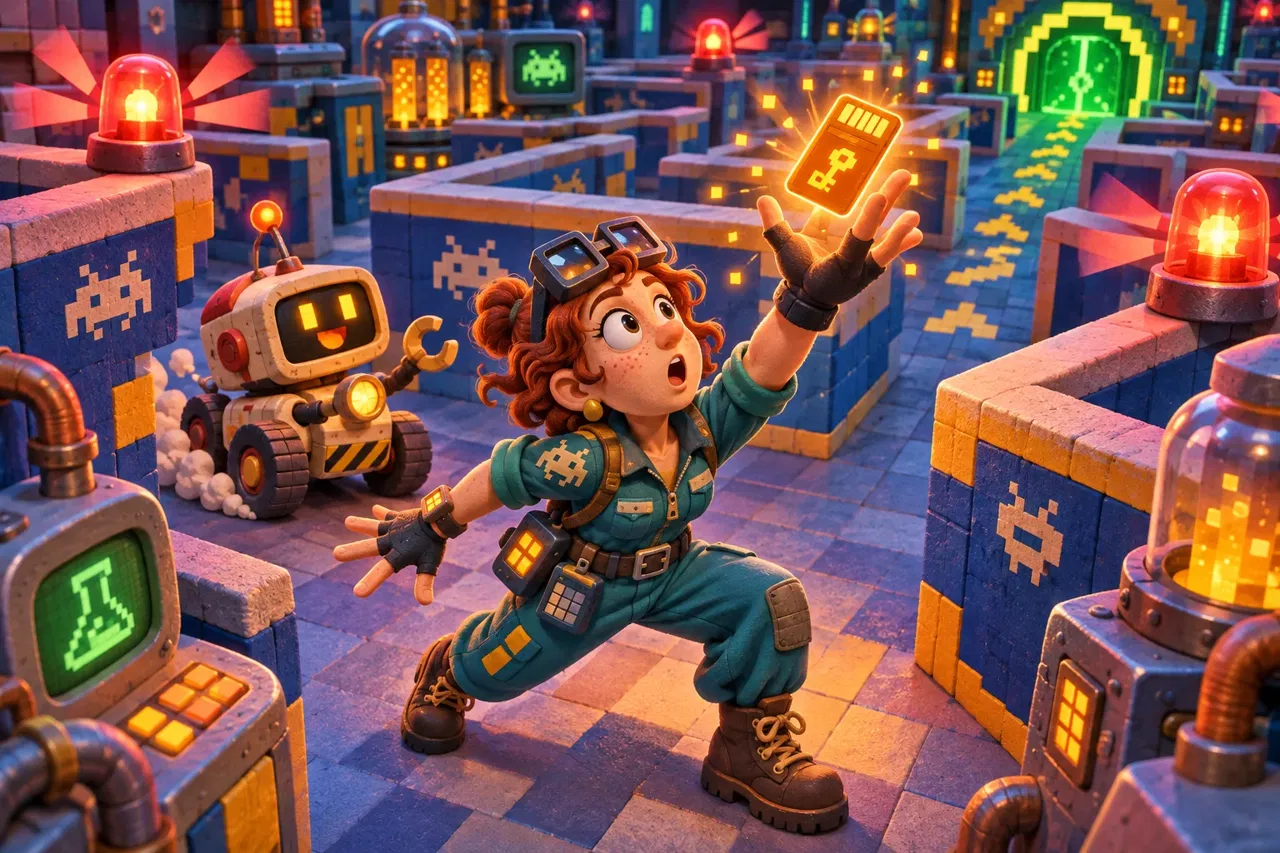
The game opens at 3:07 a.m. The machines have woken up in a robotics lab and you’re the researcher who made it to the door. Each floor opens onto another wing viewed from above. A sentry will chase you on sight, but the robot carrying the card runs away and calls for help. Take it down and the alarm keeps sounding until you leave. More robots show up and they move faster. This is when it pays to remember which way the exit was.[4]
Your weapons also determine how many hits you can take. A hit knocks you back to your spare. Take another with only your last weapon left and the run is over. Even the public leaderboard favors a quick getaway. You sign with five letters, and the floor you reached comes first. Score breaks ties. Someone who got through the door can outrank someone who stayed behind to clear more robots.[4]
The game draws the robots as it runs
The game had been public since the morning of November 22 in Taipei, according to itch.io. In his credits, Marcvs takes responsibility for the concept, rules, balance, story and art direction, which he refined through playtesting. He says Claude worked under his direction on the code, in-game text and cover.[4]
The AI-assisted label leaves out one detail you might otherwise miss. According to Marcvs, the game draws its sprites and synthesizes its sounds in code at runtime. He explained how he made a new game, and a stranger remembered nearly everything that had sat beside an old console 28 years ago. For a developer wondering whether those early influences had made it through, that was a fairly specific answer.[2][3][4]
Sources & further reading
(4)
When checking a claim, compare the source date, measurement period and conditions. Some linked pages change over time.
For information and education, not investment advice. Crypto assets are volatile. Verify independently.