Contents and sources 3 sections
Key points
- One raw frame can audition several looks before any one of them takes up a slot on the camera.
Auditioning a desert look for slot C3
At 6:13 p.m. Taipei time on November 24, Hacker News user vsmim shared x100vi-skill. Its documentation poses a travel question with a pleasantly specific deliverable. Suppose you are off to Dubai. Could you see three looks for the desert on one of your own photos, then save your favorite in C3? Dubai is the example. A street scene from home would serve just as well for a comparison.[1][3]
C3 is the third of seven custom settings on a Fujifilm X100VI. A film recipe is the sort of thing a photographer could jot down on paper: which film simulation to use, which way to nudge the white balance, how deep to let the shadows go. The tool lets Claude Code or Codex turn a description of a look into settings the camera understands. If someone already has a favorite parked in C3, replacing it requires their say-so.[3]
Which number means Classic Chrome? Time to unplug the camera
In his development notes, Volodymyr Smirnov describes the problem with getting a camera to accept a number. Knowing that it recognizes 20 film simulations still leaves you wondering which number stands for Classic Chrome. Checking against a photograph meant taking one. The shutter was unavailable while the camera was plugged in for raw conversion.[2]
Smirnov had the tool load seven test recipes. He pulled the cable, took one picture per slot, switched the camera to card-reader mode and plugged it back in. The software could then read Fujifilm’s settings from the photographs. Three rounds of shooting, no particular subject required. By his count, all 393 metadata tags checked out. That answers the question about the settings. It leaves the question about taste wide open.[2]
The dune holds still while its colors change
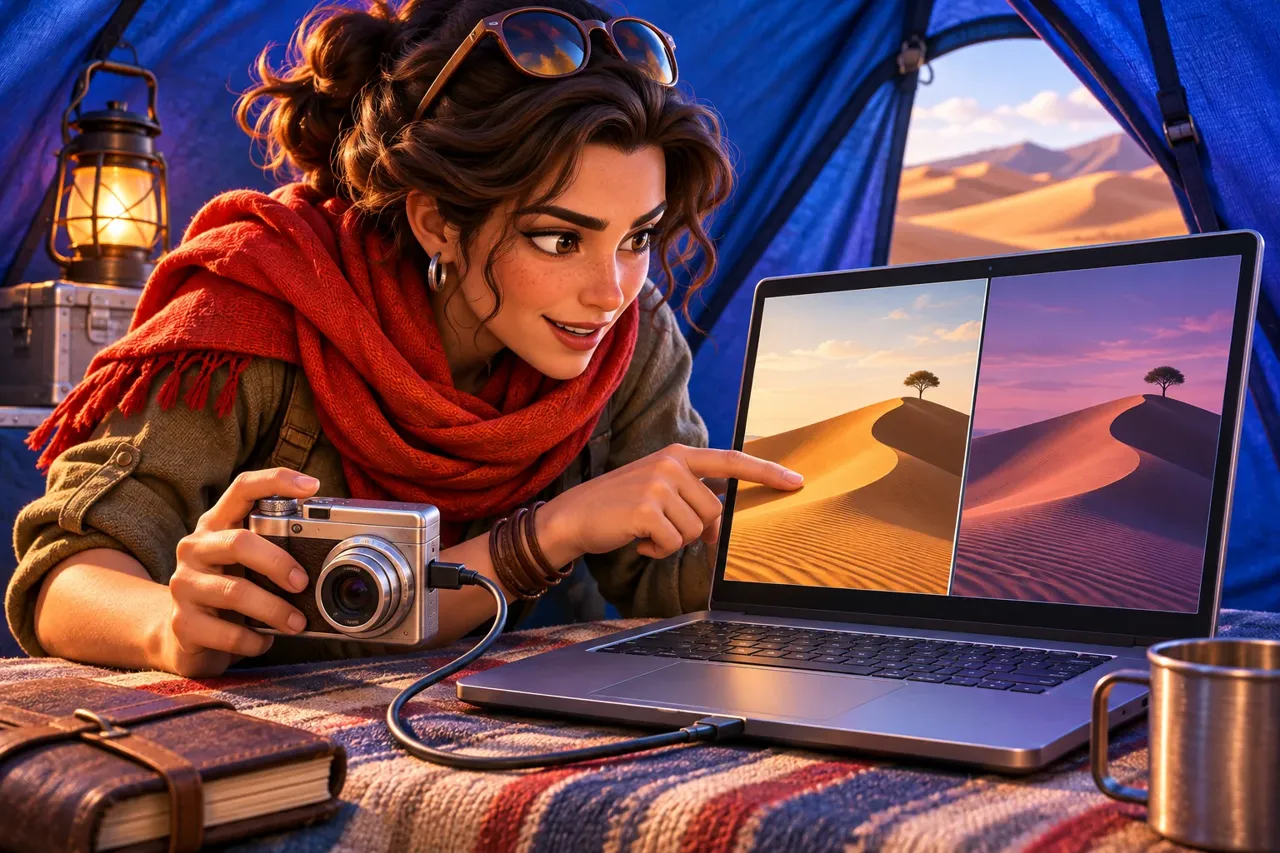
For a preview, the computer sends an X100VI raw file, called a RAF, back down the USB cable. The camera’s own processor develops the frame once per recipe and returns the results. Side by side, the dunes keep the same shape and the framing stays put. A photographer can look at what happened to the sand and the shadows, pick a favorite and call up that recipe on the next outing.[2][3]
Some choices were made when the shutter clicked. Smirnov gives the example of a frame shot at DR200. Request DR400 in the recipe and that preview still comes back at DR200, with a note explaining the difference. He tested a physical X100VI running firmware 1.31 on macOS. In his account, the Windows and Linux builds had passed software tests and were still awaiting a turn with a real camera.[2][3]
Sources & further reading
(3)
When checking a claim, compare the source date, measurement period and conditions. Some linked pages change over time.
For information and education, not investment advice. Crypto assets are volatile. Verify independently.