Contents and sources 3 sections
Key points
- The dolphin and the camel came from separate rounds.
At noon, a camel turned up in the replies
At noon in Taipei on November 23, X user @kusare_banana33 posted an image in a drawing-game thread and wondered how it had been recognized as a camel. The question works well without a spoiler: from the text alone, you can’t tell what the player meant to draw. Open the picture and you get a guess of your own.[3]
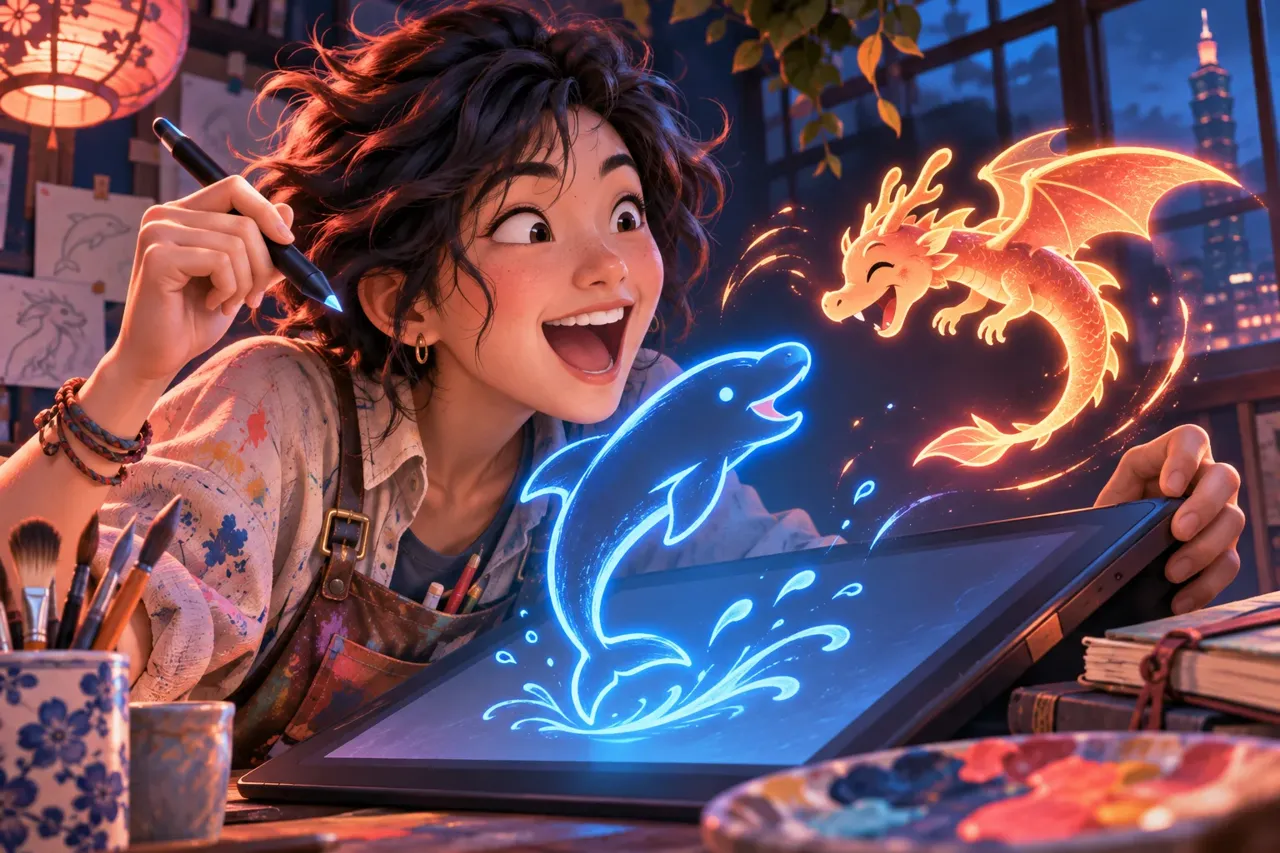
The Japanese creator who started the thread, ダンボーイ, had already supplied the first joke at their own expense. Introducing the browser game Tsuzukigaki on November 22, they said they had drawn a dolphin and got a dragon back from the AI. The camel came from a different player. Put the posts side by side and you have the beginnings of a spectator sport: everyone can point to the stroke where they saw something else.[2][3]
One or two lines are already on the page. You have 20 seconds.
The official game page lays out the constraint: start with one or two lines already on the paper, work them into a drawing of the assigned subject in 20 seconds, then let the AI guess. Given a blank page and time to draw a dolphin, you might start with its dorsal fin. Here you have to decide whether the mark you inherited could serve as the back, the tail, or something you’ll somehow have to tuck inside the outline.[1]
The person drawing knows the prompt and remembers why that last stroke went there. A spectator can look first, make a guess and only then compare it with the machine’s answer. The results screen offers a retry, the next prompt and a way to post on X. The creator’s demo and the players’ image replies preserve a joke that might otherwise disappear on the next click.[1][2][3]
One player got 100%. Another wondered who was being tested.
Under the creator’s post, @Love_Letter2nd shared an image, reported a score of 100% and remarked on the difficulty of relying on both drawing ability and memory. With seconds left, there’s some distance between remembering roughly what an animal looks like and getting one of its recognizable features onto the page.[4]
In the same thread, @kokusakumeigara raised a scoring question: if a carefully drawn picture can still be read as something else, how is the player supposed to tell what they’ve improved? The creator’s misread dolphin and one player’s perfect score are far too little evidence to put a number on the game’s accuracy. The camel post leaves spectators with a more inviting test: cover the answer and see what you notice first.[5][2][3]
Sources & further reading
(5)
When checking a claim, compare the source date, measurement period and conditions. Some linked pages change over time.
For information and education, not investment advice. Crypto assets are volatile. Verify independently.